B-17 Bomber Flying Fortress – The Queen Of The Skies Bombing Mission

 English
 Deutsch
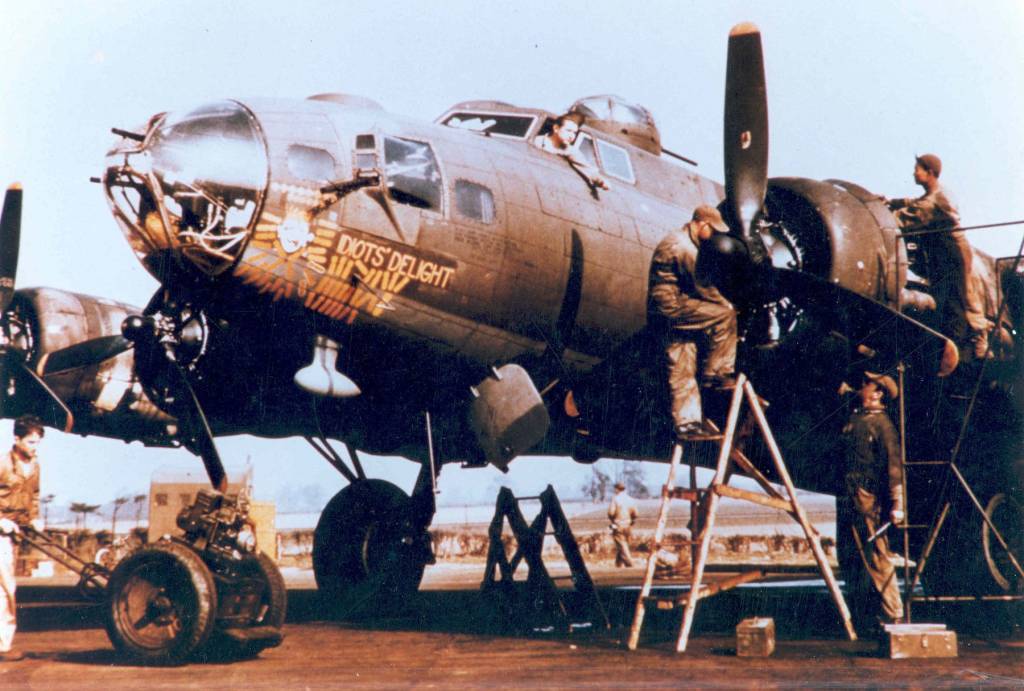
At 4 o’clock am. The noise of trucks on the move can be heard across the base, Ordanance crews are collecting bombs from the dump. The crew chief and his ground crew are already awake and at work on the aircraft. The auxiliary power plant, a small petraol generator colled “putt-putt”, is started up. It is there to boost the electrical supply of the plane on the ground and save the aircraft batteries.
The Squadron Armaments officers appears and climbs into the B-17. He opens the door to the bomb bay, walks along the catwalk and sits in the bombardier’s seat in the nose. He switches on the bombardier’s panel and opens the bomb bay dorrs by moving the first of two levers. He checks that the red warning light has come on. He then moves the second lever to on of 3 positions. He chooses “Selective” (a selective drop bombs). He switches on the Intervalometer wchich sets the bomb drop intervals and then tests the bomb shackles and electric firing solenoids by pressing the bomb release located on the top of panel. Test lights flash back at him as he switched the lever to “Salvo” (emergency drop of bombs) and “Lock”.
The Chief checks the operation of the bomb bay doors from the outside, then remove the canvas windshield cover. The Duty Mechanic removes the canvas wraps from the engine cowling.
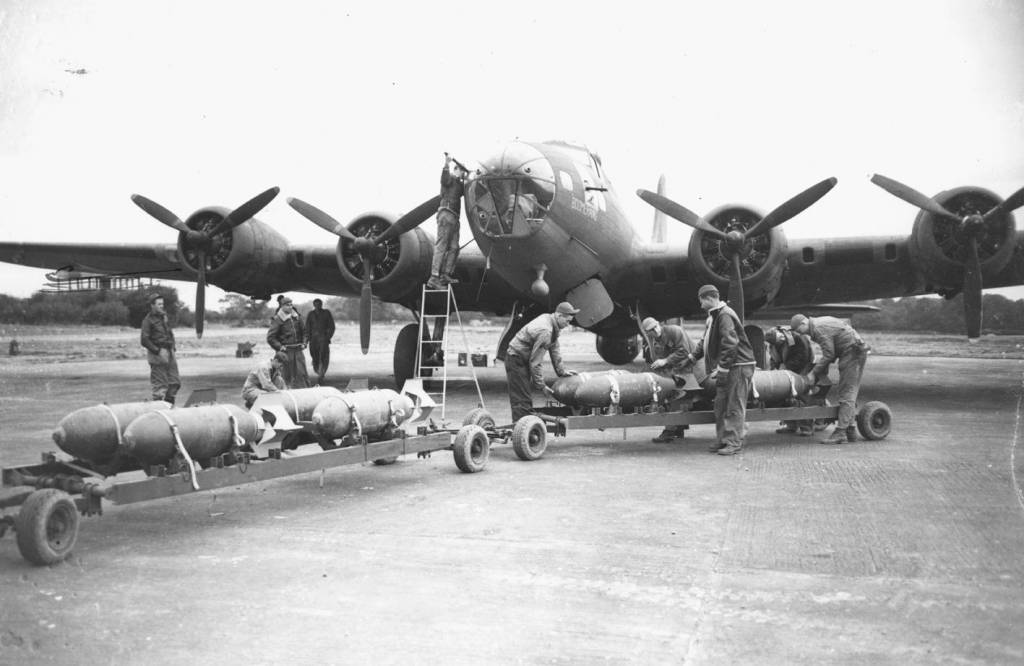
It’s not long before the ordnace crew arrive with the bomb loads. The service truck is pushed under the plane and located below the bomb bay. The trailer contains ten M-43 500lb general purpose bombs. They are all marked with two yellow bands front and back; the indication that they contain TNT. The ordnance crew attach the shackles from the B-17’s racks to two lugs on each bomb. The bombs are then winched into the bay an placed at the correct station. The tail fins are screwed on and the nose and tail fuses carefully fitted into the bomb. Each fuse has a small propeller.like vane securing wire that will be removed by a member of the crew after the bomber hat taken of.
Meanwhile, the ground crew are pre-flighting the B-17. The prop blades are pulled and turned through three complete revolutions, to remove any excess fuel which may have seeped down overnight. The Chief performs his checks. He turns on the battery and ignition switches and ensures that the terminals on the voltage converters are not shorting. The fuel booster pump is turned on, the pressure checked and the throttle set to 1000 rmp. He starts number one engine, then the other three. The turbo supercharging system, that enables the 1,200hp engines to run at full power between 20,000 and 30,000 feet, is inspected and the prop pitch controls are checked. Then everything reported faulty from the previous day’s mission is checked again.
At the same time an ammunition truck appears and unloads 10 wooden boxes of 0.50 calibre ammo into the rear fuselage door. The 0.50 calibre machine guns are loaded onto the plane and installed. Each weighs 64lbs and is capable of firing 750 rounds per minute at a maximum rang of 3,500 feet. Each magazine contains 365 rounds.
The fuel tanks are then topped up. The B-17G has a maximum capacity of 2,780 US gallons with 5 filling points on each wing between the two engines. The tanks are self-sealing Tokyo Tanks made up of a rubber composite divided up into 18 small cells. The tyres are inspected and any small oil leaks from the engines are checked for signs of deterioration. The oxygen supplies are checked. these consist of 18 light metal bottles each giving 5 hours supply to one man at 30,000 feet.

The flight crew arrive as the last major checks are being completed. They are clutching their flight bags and parachute packs, waering olive coveralls, heavy brown sheepskin jackets and trousers. A standard crew for a B-17G, by rank and position, was:
| Pilot | 1st Lieutenant |
| Co-Pilot | Flight Officer |
| Bombardier | 2nd Lieutenant |
| Navigator | 2nd Lieutenant |
| Top Turret Gunner/Engineer | Technical Sergeant |
| Radio Operator | Technical Sergeant |
| Ball Turret Gunner | Staff Sergeant |
| Right Waist Gunner | Staff Sergeant |
| Left Waist Gunner | Staff Sergeant |
| Tail Gunner | Staff Sergeant |
The crew perform their own checks and they confirm over their throat microphones that they are all in postion. The engines are started up and the altimeter is set for the height of the airdrome above sea level. The chocks are signalled away. the B-17 taxis off and joins the other bombers in a set pattern at the edge of the runway. The pilot has to keep the 30 tons of plane on the tarmac whilst not being able to see ahead. He steers by watching the edge of the tarmac paths through a side window of the cockpit and tries to use the brakes as little as possible. He knows that over use the taxiing can burn out the brake linings. The engines are revved to 1,500 rpm to clear out any muck from the spark plugs and all the while the tail gunner keeps an eye on the plane behind; in case it gets closer than the standard 30 yards. When tha aircraft gets to th edge of the mile and a quarter long runway it waits with other members of its squadron and then a “take off check” is performed: aileron, elevators and rudder trim tab controls are zeroed. the wing flaps raised and the propeller pitch control tested. the generators are turned on, the turbo-superchargers tested, the parking brake and the tail wheel lock turned off.
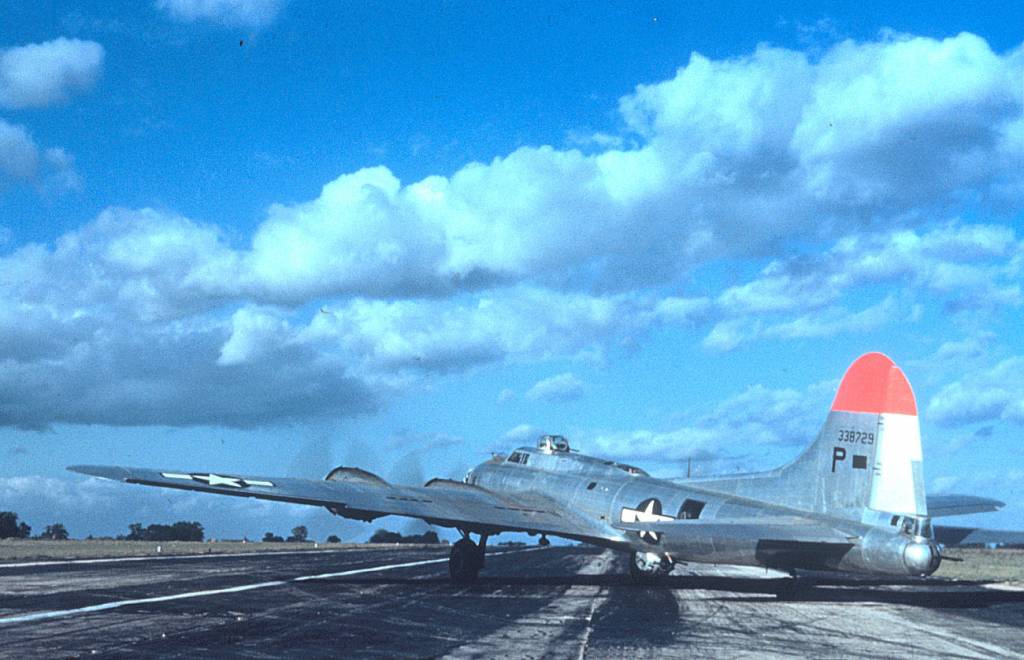
The Captain swings the aircraft into positon just after the plane in front begins to take off on the 150 foot wide runway. He locks the tail wheel to “on” to keep the B-17 straight during its run. Final checks are mede to gyros, generators and fuel booster pumps as the Captain waits for the double-flash of green light from the black and white chequered runway control van. The controller looks through the glass roof of the van and signals with an Aldis lamp. He tries to time each take off at one minute intervals. The Captain takes the pressure of the foot brake and selects the correct manifold pressure and opens the throttles. At 100mph, the B-17 takes off and the pilot eases up control column and raises the landing gear. This is an anxious time for most crew as the plane, packed full of bombs and fuel, climbs gradually and builds up speed. At the IAAS (Idicated Air Speed) of 150mph the Captain throttles back and reduces the rmp from 2,500 to 2,300 feet per minute and flying through any overcast, to assemble in formation above the clouds. this is the time when there is the greatest risk of collision with another aircraift in the Group.
The Captain’s next task is to assemble in formation with other planes of the squadron, as stipulated by orders. A radio compass is used that works with short range radio beacons in selected locations. A morse call sign (called a Buncher signal) is transmitted and the plane receives it via a small loop aerial loceted under the nose section. Lead aircraft fire different cloured flares at 10,000 feet to give a visual check for other pilots. Squadrons have to be built into Groups, Groups into Wings and Combat Wings into Divisional Columns. The whole process is very slow because everyone has to keep up with everyone else. Above 10,000 feet the crew are told to go to oxygen. The heating should already be operational. The two waist gunners have electrically heated flying suits under their sheepskins but the rest of the crew have warm air ducts that channel heat to their sections. the ball turret gunner is the last to get into position. The turret ist very cramped and always assigned to someone who is of small built. He has to spend about 5 miles below him, withoout the comfort of a parachute. If something happened to the B-17 it would take him, with help, about a minute to get out and get his parachute on; a minute in a crashing B-17 is an extremely long time.
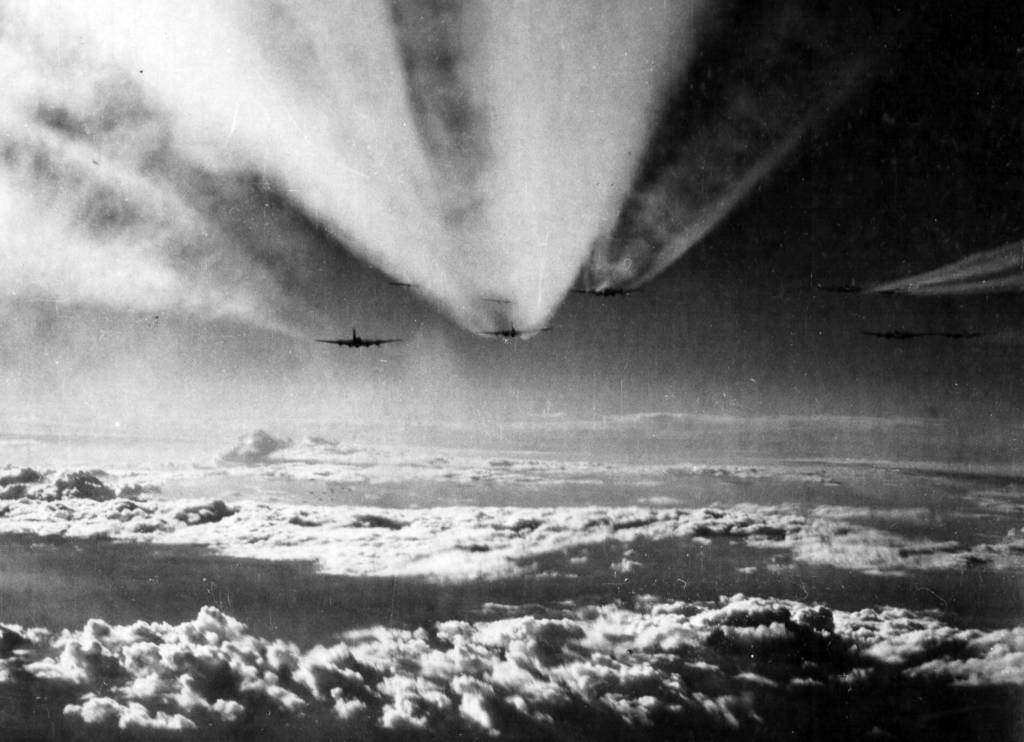
At 13,000 feet, the aircraft climbs at 200 feet per minute. Above 19,000 feet, the ball turret gunner reports contrails; gases from the hot engine exhaust meeting the frozen air in areas of high humidity producing condensation trails. the formation levels off at 21,000 feet. The Navigator, even though they are travelling in formation, keeps an accurate track of their position using hie “GEE” box. The guns are loaded and test fired about 30 miles off the English coast, at the same time the arming pins are removed from the 10 bombs in the bay. The Captain looks at the Airspeed Idicator which registers 150mph but knows is not the true airspeed (about 206mph). Working on atmospheric pressure the AI reading declines with increased altitude.
Over the enemy coast the crew don their cumbersome flak suits, worn loke body armor made of overlapping thin steel plates inside canvas sprons. They know the German radar and listening posts will have been tracking them for the last hour and the enemy defense controllers will be trying to guess their mission objectives. The gunners in the B-17 look all around their field of fire re-assured by the sight of the zig-zagging “Little Friends” at 6,000 feet above them; P-47’s fitted with long distance drop tanks. then the flak begins to burst in little black clouds around the formation.
The formation reaches the Initial Point: the selected point over which the bomber force will begin its turn to make the bomb run on the target. Flares are fired to give visual confirmation. In this case, the cloud cover (undercast) is too thick,and the leading aircraft from the pathfinder force will mark the target using their H2X ground-scanning radar sets. The leading Combat Wing approaches the bombin run. There are four minute intervals between Wings. Flak intensified and squadrons of enemy fighters sweeo through the formations firing at “Purple Heart Corner”: the lowest, rear most and therefore most exposed flight in the formation.
The bombardier opens the bomb bay doors and flips open the safety lever on the bomb release. In this missions he does not have a bomb sight and is waiting for the lead bombardier is lined up on the smoke markers released by the pathfinders, a red flare is fired and the bombs are released.
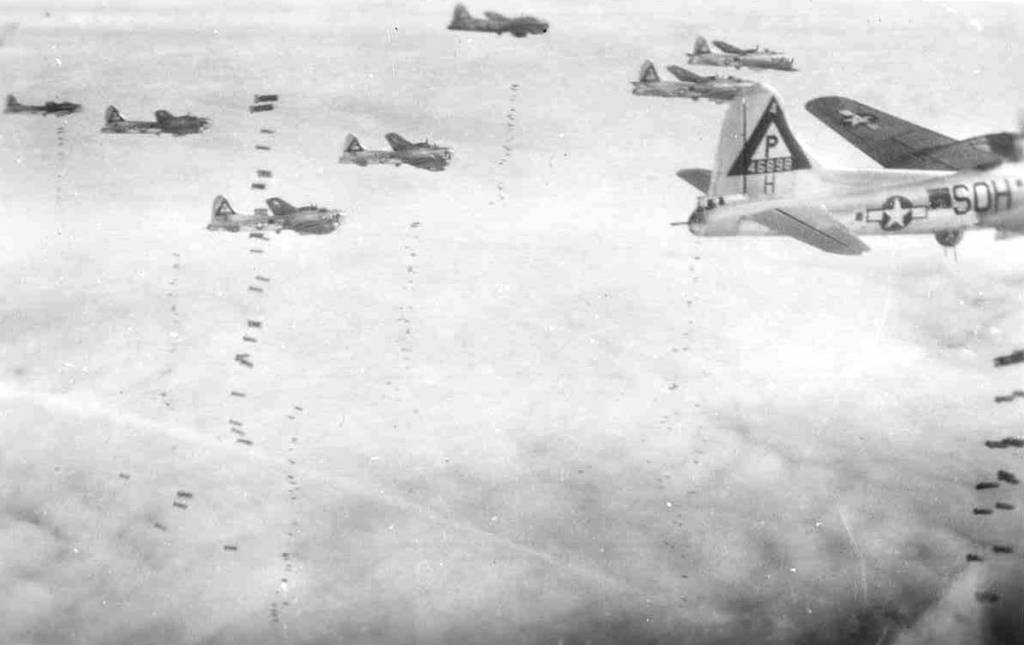
The group hope to bomb a compact area 500 by 250 yards. The ball turret gunner confirms that the bombs have been released and the bomb bay is checked to see that all bombs have gone and then the doors are closed. With the loss of the weight of the bombs the formation speeds up to about 160 IAS (244mph) and heads for the designated rally point.
The rally point is chosen as a known area out of range of enemy flak batteries where the squadrons can be re-form into defensive combat wing formations. The combat wing leader tells the radio operator to send a “target bombed” massage to HQ.
100 miles from home, IFF (a signal Identification Friend or Foe) is switched on by the radio operator to warn friendly bases of the force passing above them. During the mission the B-17 could identify itself to friendly aircraft by firing coloured flares on a pre-set code or by flashing the correct mission code with an Aldis lamp. The plane now drops 500 feet per minute and, once below 10,000 feet,the crew come off oxygen. Home base is informed of their arrival and all activity is based on their ETA.
Flying control picks up radio signals from the formation approaching the base. The Ops officer is already waiting at the tower. The duty clerk informs the MP’s, ambulance and fire tender crews. By the time the planes are over the airfield they have spaced themselves out giving priority to those with casualties and damage. After these bombers have landed the order of landing is the lowest altitude squadroon first. Bombers land at about 20 second intervals, planes with casualties turn off the runway as soon as pissible to be intercepted by awaiting ambulandces. Other bombers use the two outside engines to taxi directly to their airfield dispersal point. The flight crew get out, stretch their legs, inspect their aircraft and pack their flight bags. The gunners remove the guns and clean them ready to be collected by the ammunition crews. The pilot fills in Form 1A to report any flight problems and damage sustained on the mission.
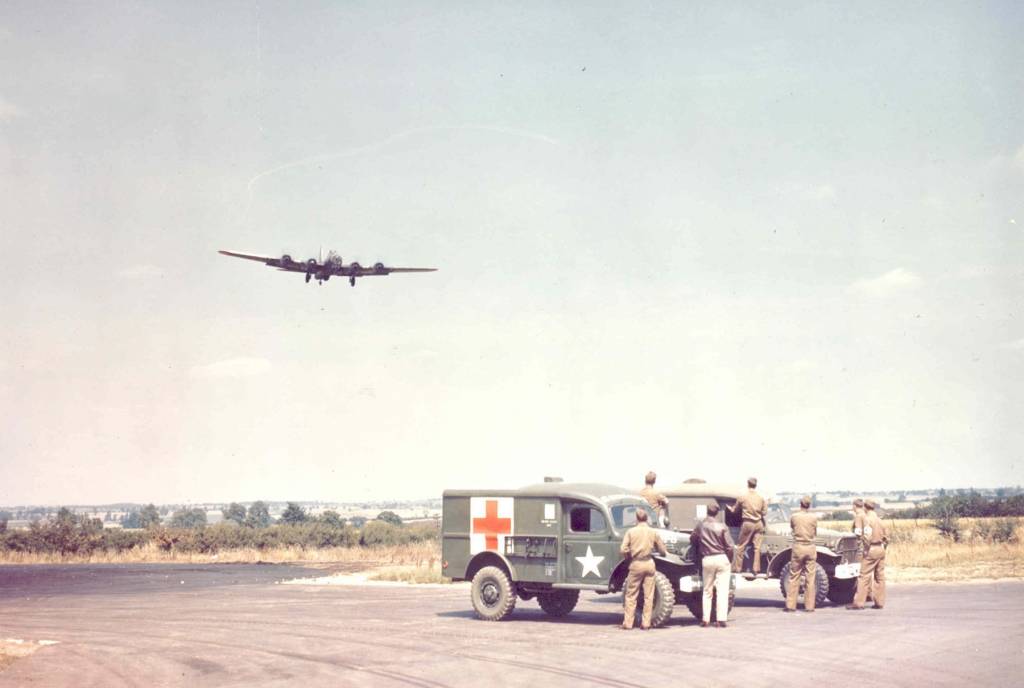
The flight crew get out, stretch their legs, inspect their aircraft and pack their flight bags. The gunners remove the guns and clean them ready to be collected by the ammunition crews. The pilot fills in Form 1A to report any flight problems and damage sustained on the mission.
A truck arrives to collect the flight crew and take them directly to the breifing rooms. Here, personal equipment is handed in (parachutes, flying suits, oxygen masks, Mae Wests etc.) and the crew get something to eat.
An Ops officer lists any items of important news that has to be acted up immediately; such as aircraft in trouble, planes ditching in the sea and important enemy activity. When all is ready, the crews are interrogated; one interrogating officer per crew.
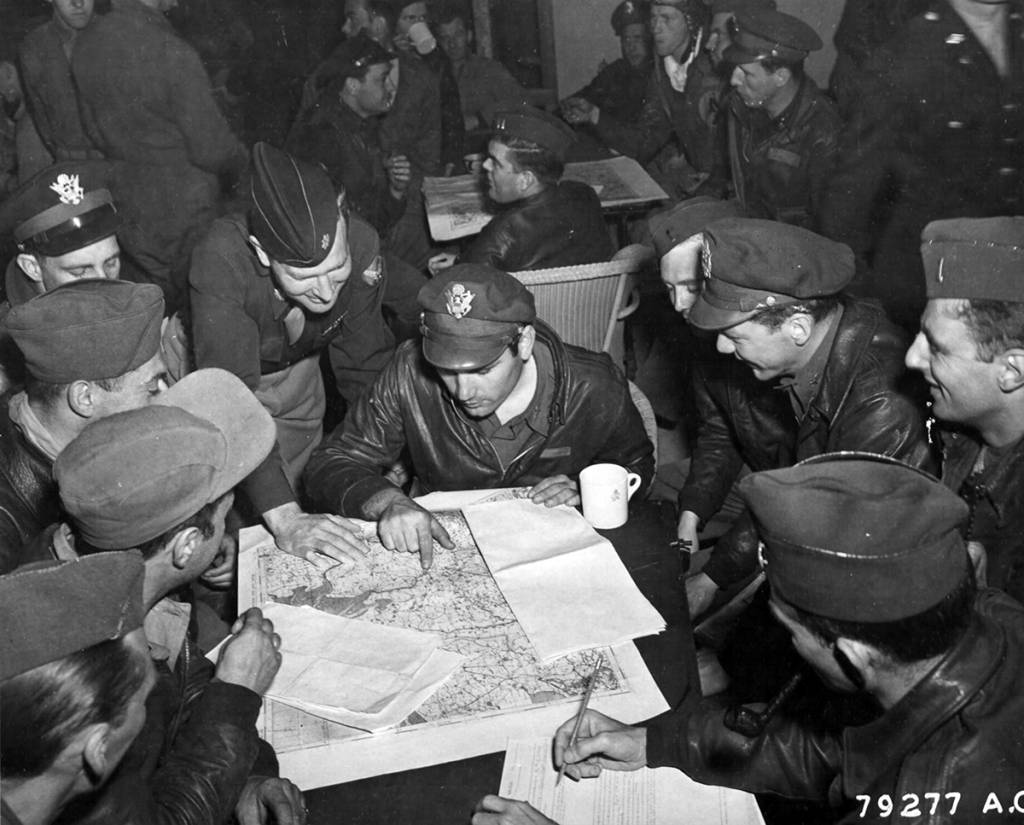
The officer asks a standard set of questions encom passing all aspects of the mission, such as enemy fighter numbers, flak locations, weather over the target, fighter escort, lost aircraft and any other observations. Claims by gunners for the number and type of aircraft shot down are then reviewed and compared in order to avoid “doubling-up”.
Navigators hand in their flight logs and, with bombardiers, write up their own specific reports. Lead bomber crews are interrogated further with more detailed questions. The whole process takes upwards of one hour forty-five minutes. When the crews are dismissed, trucks take them to the mess hall or back to their barracks. Most will want to sleep, shattered by the fatigue of combat. They know that they may be called upon to fly again in a few hours time.
Pictures taken from strike cameras are studied in Group Operations and Intelligence rooms as soon as they have been processed. The Group strike pattern on target is plotted and a detailed report sent to Wing and Division. An assessment of the results of the bombing is analysed at
Division HQ and the loss to the enemy is calculated. If necessary, the target is put back on a priority list for future attack. Meanwhile, the ground crew is back at work on the planes. They have been sleeping for the duration of the mission, now they are back at work patching up the aircraft and maintaining each bomber; ready for another combat mission tomorrow morning.